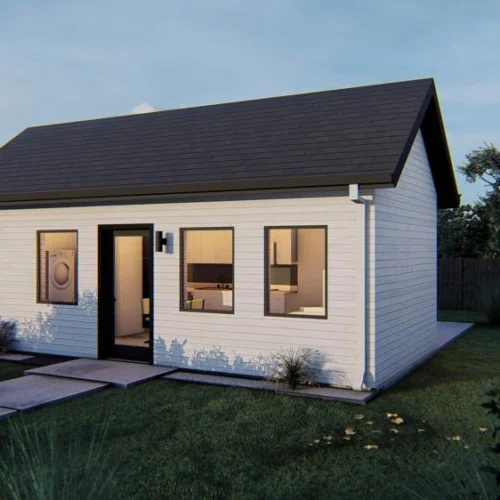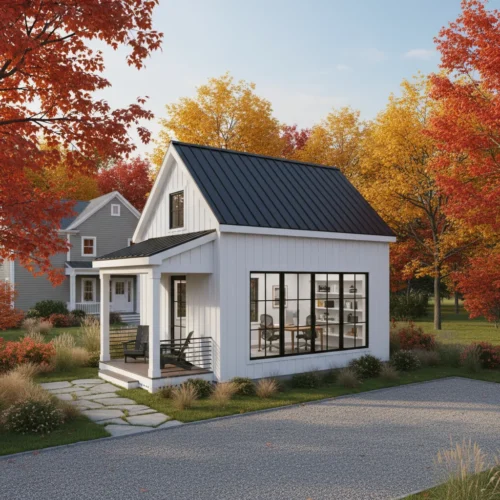
In this episode, builder Dave Potter demystifies ADU red tape in Massachusetts. A 2025 statewide law streamlines approvals, so most projects need only a building permit, with occasional planning-board site plan review. Expect requirements like a separate entrance, possible two egresses, and, for detached units, some towns may demand separate water and sewer from the street. Avoid costly delays by finalizing design choices early and matching the main home’s style. Post-COVID online permitting often takes about two to three weeks. Potter stresses clear goals, steady communication, and selecting an experienced team to keep changes minimal and the process smooth.
John Maher: Hi, I am John Maher. I’m here today with Dave Potter. Dave has been a licensed builder and real estate developer since 1980. He’s completed hundreds of projects in his career. Now Dave is specializing in accessory dwelling units or ADU in Massachusetts. Today we’re talking about permits, zoning, and the red tape of ADUs. Welcome Dave.
Dave Potter: Hi, John. Good to be here.
Learn About Permitting for an ADU
Maher: Thanks. Dave. What are some of the things that confuse homeowners the most about permitting when it comes to ADUs?
Potter: Well, they don’t know where to start. They don’t know. They think that it’s a long drawn out process. For years, you’d have to go to the zoning board of appeals, and it’s really quite simplified with this new law that was enacted in February of 2025 by the governor and her team. And you basically just get out and build out, take out a building permit. Some towns might want you to go in front of the planning board just to have a site plan review, but if you’re doing something, an addition or an existing dwelling or something like that, then you have less red tape.
Working with Different Towns on ADUs
Maher: Okay. Are there certain towns that are easier to work with than others?
Potter: Well, the governor in this law has actually explicitly said that all towns need to work with this law. They all have to have a certain, it’s a model zoning that they actually came up with that they want them to all take in and use as their own zoning every city and town. So, all of the cities and towns have to do it where the cities and towns can get a little bit restrictive and it’s allowed is whether they can be rented from less than 31 days as an Airbnb. They can get more restricted on egresses. That will be, the fire department might come in and say they want two egresses instead of just one along the city. The law says you have to have at least one. It has to be a separate entrance from the main existing dwelling.
Maher: Okay. What are some of the other considerations that might vary from town to town
Potter: From different towns? Mostly that, and some towns will get into water and sewer issues if you have a separate building. If you want to put a freestanding building on your lot, which is allowed, but they might say, well, you can’t go through the main building. You have to have a separate waterman sewer coming all the way out to the street. And there’s issues like that.
Common Mistakes Homeowners Make with an ADU Project
Maher: Okay. What are some of the common mistakes that homeowners that might delay an ADU project?
Potter: Well, a lot of the mistakes that homeowners make is they make changes halfway through. And the best customers to work, best clients to work for are the ones that know what they want. Either they know or they’ve already hired an architect, an interior designer that knows or they know exactly what they want and they’re not going to change their mind because changes are expensive.
When you see a contractor go in, not me, but other contractors, they’re actually low balling you with the price because they know they’re going to come in with huge change orders. I don’t like to do that. I like to live to my price that I say, because that’s your budget. That’s what you’re figuring on. If I come back and says, oh, you changed this for instead of a brass door knob to a silver doorknob, I’m going to charge you a thousand dollars.
No, I don’t do that. But what I like to know is, do you know exactly what you want? And then we come in and we look at it and I suggest certain things. I said, this would look good, but what do you want? And it starts with the first interview that I have with the clients. What do they want? What have they been looking for? The ones that I love and the ones that have pictures from Pinterest and from this and from that.
And they show you, this is what I want. I’ve wanted this my whole life. I had one client, I did one for her, and she said, I wanted this faucet with this gold vein granite and this. I said, she was so explicit. She had the model numbers and everything. And I said, oh my gosh, please, can you have a class for everybody? That’s how you get your project done. And we got that project done all three months. It was done very quickly because it was not a single change order there. And what came up perfect.
Maher: And no going back and forth, oh, what type of faucet do you want? Oh, what type of windows do you want? Or whatever. It was all laid out right from the beginning.
Potter: Right. Yeah. Yeah. And that’s what I suggest. Everybody know what you want first. There always can be changes and it’s not a big deal if somebody changes things on me and say, I see it in person. I really don’t like it. No big deal. We’ll send it back and let’s get one that you do like.
How to Plan for an ADU?
Maher: Now what if I don’t know what I want, but I know I want an ADU. Maybe I have the reason for it. I want my parents to move into the house and move into the ADU or something like that. But I don’t really know what style or what works for me. How do you work with a client like that?
Potter: Oh, it’s easy. I spend a lot more time talking with them before we even pick up a hammer and we nail it all down together. I’ve got 40 something years of experience. So doing it and dealing with all of the different variables that come up and there’s always something that might come up that they might have to change. As a builder, as a contractor, I have to be very perceptive to that and keep the client aware of everything that’s going on.
I just did a job for somebody and they went away because it was in their house and they had little kids and their kids are cute as hell, and they went away and they wanted to be kept abreast of everything, every four hours of what was happening. And I said, sure, no problem. I sent hundreds of pictures a day to these, and I had no problem doing that. They just wanted to know what was going on, but they knew exactly what they wanted and I got it from ’em. And they came back from their vacation. They were thrilled. I thought it was like one of those TV shows you said, where you have people coming home.
Maher: Provide people Sure did the big reveal at the end.
Potter: So, it was actually a pretty good project.
How Long Does the Permitting Take?
Maher: In terms of permitting from the state or the town, how long does that process usually take?
Potter: That can take, depending on the complexity of the project, that can take two to three weeks post COVID. Everything’s online and it can be fast. I have a really good rapport with just about every building inspector and around the north shore, north of Boston, so I can get it done, inspector, as long as the plans are there and everything’s good and the fire department doesn’t have any objections, we can get a permit two to three weeks.
How Can You Simplify The Process?
Maher: If I come in and I really don’t know anything about building or what I’m looking for. How do you help to simplify everything for your clients? The whole permitting process?
Potter: Well, it starts with the existing structure. We look at, I take you outside and I say, what do you like about this existing structure? And let me tell you what kind of architecture you have here. Right now I have three awards for historical preservation, one from hud, one from the city of Salem, and one from the city of Beverly. And I can tell, I like to keep in line with what’s there already.
A lot of the houses, even the houses that were built in the fifties and sixties, are really classic architecture here in New England. And if you stay in line with what those houses have, were built for in the design of those houses, you can’t go wrong. And then we try to get that design to stay like that and it works out well. And I’m always, it’s a give and go as to what do you want to see, what do you like?
What does a client want? How are they going to live there? Who’s going to move there? Are they going to rent it out? Are they going to have, are they going to move there? What is happening here? How do you live? What’s your lifestyle? Do you like an open thing or do you like to have a little bit of privacy where if you have an older couple, there was one older couple, they wanted to have two separate bedrooms, two separate bathrooms.
They loved each other, they stayed together, but they couldn’t sleep together because they wake up all night with one of the other snoring. So I built them two separate bedrooms and there you go. And they loved it, but that was one of the things, I wouldn’t expect that going in, but that’s what they said and it worked out well.
Maher: Alright, well that’s really great information, Dave. Thanks again for speaking with me today.
Potter: Thank you, John.
Maher: Yeah. For more information about Dave and ADU projects in Massachusetts, visit davepotteradu.com or call six six build ADU. That’s 662-845-3238.